
For a startup, startup copier lease vs rent in Baltimore is more than an equipment decision because every recurring expense affects how long available cash can support the business. Renting usually provides greater flexibility, while leasing can lower the monthly equipment burden when printing needs are steady. The right choice depends on how long the startup expects to operate from its current office, how much it prints, and how much financial flexibility it needs.
The key copier lease vs rent cash flow impact comes down to flexibility versus predictable spending. Rental can make sense when uncertainty is high and the business may need to change direction quickly, while leasing can work well when printing is consistent and the company can support a longer commitment. For startups, understanding how copier leasing protects startup cash runway starts with comparing the financial commitment against the expected life of the business plan.
Option A: Renting to Protect Strategic Agility
Copier rental is often the more flexible choice for a startup with a short runway or uncertain operating plans. Instead of committing to a long equipment term, the company can use a copier for a defined period and adjust its equipment strategy as its needs change. This can be especially useful when the startup is still determining its ideal office size, staffing level, or document volume.
When Renting May Make More Sense
| Startup Situation | Why Rental May Fit |
| Runway under 18 months | Limits long-term commitment |
| Temporary office | Equipment can match the office term |
| Uncertain print volume | Avoids committing to oversized equipment |
| Possible business pivot | Provides greater flexibility |
| Rapidly changing headcount | Equipment needs can change with the team |
The copier lease vs rent cash flow impact is therefore not determined by the monthly payment alone. A rental may cost more each month but create less exposure to a long-term obligation that could become difficult to manage after a pivot. For a startup with less than 18 months of runway, fluctuating headcount, or a short-term office arrangement, rental can provide a more adaptable path.
Option B: Leasing to Lower Monthly Cash Burn
The benefits become more noticeable when printing volume is consistent. A startup producing thousands of pages each month may benefit from a properly sized multifunction copier and a service agreement that combines equipment support with predictable usage-related costs. In that situation, how copier leasing protects startup cash runways is tied to reducing the need for a large upfront equipment purchase while creating a more predictable operating expense.
Leasing may be appropriate when a startup:
- Has stable funding or a runway of roughly 24 months or more.
- Expects consistent copier use.
- Prints at a high monthly volume.
- Needs dependable service and maintenance.
- I want newer equipment without buying it outright.
- Can comfortably support the agreement if funding plans change.
For a growing startup, the goal is not simply to find the lowest payment. The goal is to find a copier arrangement that provides the required performance without creating a fixed expense that restricts future business decisions.
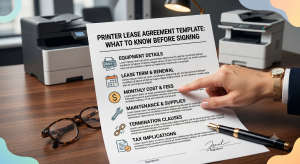
However, a lower monthly payment does not automatically make leasing the better choice. A startup should compare the full contract cost, service charges, usage terms, early termination provisions, and end-of-lease requirements before signing. A 36-month agreement can outlast a startup’s current funding runway, so the company should be confident that the copier will remain useful throughout the expected commitment.
How Copier Leasing Protects Startup Cash Runway
The question of how copier leasing protects startup cash runways deserves a closer look because leasing can preserve capital without eliminating the cost of equipment. A startup that purchases an expensive multifunction copier outright may use a significant amount of working capital on an asset that does not directly generate revenue. Leasing spreads that expense over time, allowing more cash to remain available for operational priorities.
Three Numbers to Compare Before Signing
- Monthly equipment and service cost: Determine the recurring expense the business must carry.
- Expected contract duration: Compare the commitment with the startup’s funding and office plans.
- Monthly print volume: Make sure the selected machine and usage terms match actual demand.
There is also a budgeting advantage when equipment payments and service costs are predictable. Instead of dealing with a large upfront purchase followed by separate repair and supply expenses, a startup may be able to structure a plan around regular payments and a service agreement. This can make monthly planning easier and help management understand the expected copier lease vs rent cash flow impact before committing.
What Startups Should Check
Before accepting either option, a Baltimore startup should review:
- Total monthly cost
- Contract length
- Early termination provisions
- Service and repair coverage
- Toner and supply terms
- Usage or page allowances
- Overage charges
- Upgrade provisions
- End-of-term requirements
- Delivery and installation costs
A startup should also ask what happens if the copier breaks down and how quickly service is provided. A low monthly payment offers little value if equipment problems repeatedly interrupt employees’ work. Therefore, service quality should be treated as part of the equipment decision rather than an afterthought.
Match the Copier to the Funding Stage
A startup should not allow office equipment to become a financial anchor. When the business has a short runway, uncertain plans, or a strong possibility of moving or changing its workflow, rental can reduce commitment risk even if the monthly cost is higher. When the business has stable funding, consistent print volume, and a long-term need, leasing can reduce upfront spending and create more predictable equipment costs.
Ready to choose a copier without putting unnecessary pressure on startup cash flow? Call Clear Choice Technical Services of Baltimore at (410) 220-5299 for a personalized equipment assessment and quote, or ask about a free demo trial. The team can help compare flexible rental and lease options so the startup can choose the right equipment without letting copier commitments get in the way of growth.